Showing posts with label John Huston. Show all posts

Thursday, September 2, 2010

The John Huston Blogathon: The Complete Contributions


Having finally published a climatic dual piece on my two favorite Huston films, The Treasure of the Sierra Madre and The Man Who Would Be King, I can now officially end the John Huston blogathon--which originally was supposed to end on August 12, but I became so determined to published some pieces I hadn't been able to write by that deadline (and wanted to wait, also, for others who were late in their contributions) that I held out for another month. Has that ever happened before in the history of blogathons?

A week before the blogathon began, John Huston himself shot this introductory video wishing us well and hoping that we would do good in honoring his legacy and his 104th birthday. Well... coincidentally, I received this new video by Huston in which he determines whether or not the blogathon was a success! CHECK IT OUT, IF YOU DARE.

(again, just for laughs)

Before I repost the links to all of your contributions, I think it would only be appropriate for me to go out by making a list of the Huston films that I think are absolutely essential for any beginner. In my own order of preference, here are the films you must see in order to fully understand just how much of a master filmmaker he really was:
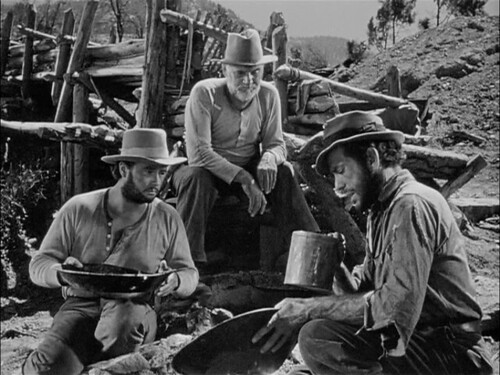


1. The Treasure of the Sierra Madre (1948)

John Huston's masterpiece. A milestone in acting, writing, directing and everything else. The Treasure of the Sierra Madre is my favorite American film of all time.


2. The Man Who Would Be King (1975)

Huston made several more great films after Treasure, but this was the closest he ever got to the masterful qualities of that film. Sean Connery and Michael Caine have never been better than they are here as Danny and Peachy, and Christopher Plummer rounds out the already-impressive cast as the skeptical Rudyard Kipling, who regretfully shakes their hands goodbye as they embark on a dangerous quest to become kings of Karifstan. Had Kubrick's Barry Lyndon and Spielberg's Jaws not been released in the same year I would immediately declare this film the finest film of 1975... it's just so perfect.
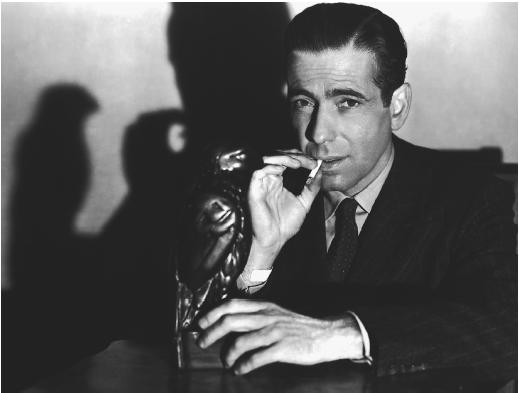


3. The Maltese Falcon (1941)

What else is there to say about The Maltese Falcon that hasn't already been said? It's the first great detective picture (and in some respects the best). It's pure film noir. It even gets better with repeated viewings; not until the third viewing, I don't think, can you truly understand the complexities of a protagonist like Sam Spade, and why, despite being a crooked detective, he won't give way to love and riches when having to choose between that and his obligations to the law.


4. The Night of the Iguana (1964)

The finest cinematic adaptation of a Tennessee Williams play there is. Huston takes Williams' story of four lost souls abandoned by God in Mexico--like iguanas--and makes it intensely personal and heartfelt, just barely managing a happy ending. The three primary actresses -- Ava Gardener, Sue Lyon, Deborah Kerr -- have a ball, especially Kerr, who steals the movie during an amazing scene in which she reflects back on her life of chastity. But it's Richard Burton's towering performance of the exiled Reverend Larry Shannon that carries the film's weight, resulting in one of the few star-studded films of the 1960's to emerge an actual masterwork.


5. The Asphalt Jungle (1950)

There may be no heist picture out there, with the exception of Kubrick's The Killing, that even begins to approach the genius of The Asphalt Jungle. Huston had us somehow rooting for the antiheroes--the diamond burglars--because they all have human qualities that make us care about them in some fashion or another. Particularly Dix (Sterling Hayden), who doesn't want to use the money for any greedy advantages; he just wants to do what any Hustonian protagonist wants to do and get back home.


6. Wise Blood (1979)

Brad Dourif IS Hazel Motes. He's a living, breathing motion picture reflection of Flannery O'Connor's warped fundamentlist: a man who wants to clean his country of the commercialized Christianity that had settled in while he was away fighting in the war, and--when that doesn't work--proceeds to attempt to turn himself into a holy martyr in the most horrific way possible. Definitely Huston's most chilling film.


7. The Dead (1987)

For his final film, Huston, being ever-so-much a director with a penchant for adapting classic literature, chose to adapt Joyce's most honored short story. A Christmas party in early 20th-century Ireland is quickly exposed as the sad, fraudulent celebration that it is, as each of its participants is revealed to be a person who is unhappy, sinister, mentally unstable or simply a once-talented figure whose talents have now faded away. Not until the final fifteen minutes does it all come pouring out--in a way that I will leave for you to discover. I've only seen The Dead once, and I intend to keep revisiting it. It's a shell-shocking film, and a profound swan song for one of cinema's finest directorial careers.


8. Fat City (1972)

"How'd you like to wake up in the morning and be him?" asks Billy (Stacy Keach), observing an invalid Asian diner clerk who probably never had much of a life. "Jesus, the waste! Before you can get rolling, your life makes a beeline for the drain." Ernie (Jeff Bridges), sitting next to him, tries to look on the bright side: "Maybe he's happy." And then Billy pointedly observes, "Maybe we're all happy." These two men are at miserable crossroads in their lives. Billy is an aging boxer who has spent the last years working as a fry cook and as a ranch hand; his latest boxing match earned him barely over $100. Ernie is a teenager who tried but failed to be a boxer and has now settled down as a family man. Huston's rawest, harshest slice of Americana.
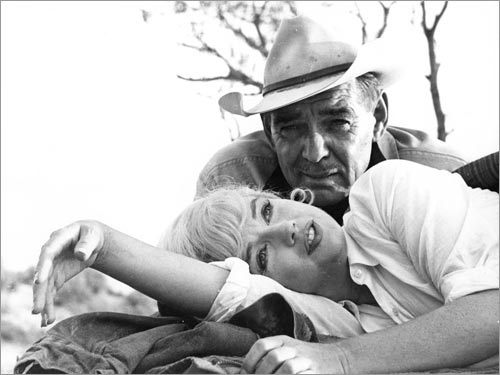


9. The Misfits (1961)

It's been awhile since I've seen this film, but I've seen it twice and have never forgotten how powerful it is. Both Clark Gable and Marilyn Monroe gave the best performances of their respective careers in this film. Arthur Miller's screenplay feels heavily flawed on a first viewing, and then somehow feels so, so dead-on on a second viewing.


10. Heaven Knows, Mr. Allison (1957)

Like The African Queen, it's a war story about two people of the opposite gender fighting to survive together, but unlike Charlie and Rose, the relationship between Allison (Robert Mitchum) and Sister Angela (Deborah Kerr) is never consummated. They're stuck on a desert island in the middle of WWII, and he loves her and wants her to be his wife; but she has already pledged her marriage to Christ. Frustrated by her refusal, he complains, "We don't belong to nothing but this island! We're like Adam and Eve, and this is the Garden of Eden!" For Huston, this was a variation on what Adam and Eve could have done right.

Honorable mentions to: The African Queen, Let There Be Light, Key Largo, We Were Strangers, Moby Dick, Freud, The Life and Times of Judge Roy Bean, Under the Volcano and Prizzi's Honor.

A handful of important Huston titles that I wasn't able to see in time for the blogathon, and am still seeking out: Moulin Rouge, The Red Badge of Courage, Reflections in A Golden Eye and The Kremlin Letter.

Here, now, is the complete list of every contribution that was submitted to the blogathon:

The Maltese Falcon (1941) by Chris Z.

The Maltese Falcon (1941) by John Greco

A Spanish Piece on The Maltese Falcon (1941) and The Treasure of the Sierra Madre (1948) by Jaime Grijalba

In This Our Life (1942) by Stacia of She Blogged By Night

Report from the Aleutians (1942), The Battle of San Pietro (1945) and Let There Be Light (1946) by Tom Hyland

The Treasure of the Sierra Madre (1948) by Andreas of Pussy Goes Grrr

The Treasure of the Sierra Madre (1948) by John Greco

Key Largo (1948) by Bryce Wilson

We Were Strangers (1949) by Judy Geater

The Asphalt Jungle (1950) by Ivan G. Shreve, Jr.

The Asphalt Jungle (1950) by John Greco

The Asphalt Jungle (1950) and its similarities to Kubrick's The Killing by Joel Bocko

The Red Badge of Courage (1951) by Tom Hyland

The African Queen (1951) by Ratnakar Sandasyula

The Committee for the First Amendment: Huston vs. the HUAC by Adam Zanzie

Beat the Devil (1953) by Thomas Duke

Collaborations with Humphrey Bogart by Ratnakar Sadasyula

Moby Dick (1956) by Roderick Heath

Heaven Knows, Mr. Allison (1957) by Adam Zanzie

The Misfits (1961) by Tom of Motion Picture Gems

Freud (1962) by Tom Hyland

The Bible... In the Beginning (1966) by Tom of Motion Picture Gems

Reflections in A Golden Eye (1967) by Thomas Duke

Sinful Davey (1969) by Adam Zanzie

Huston's Performance in Myra Breckenridge (1970) by Larry Thomas

Fat City (1972) by Edward Copeland

The Life and Times of Judge Roy Bean (1972) by Adam Zanzie

The Mackintosh Man (1973) by Judy Geater

Huston as a Modernist and Anti-Mythologist by Andreas of Pussy Goes Grrr

Wise Blood (1979) by Adam Zanzie

Wise Blood (1979) by Jake Cole

Wise Blood (1979) by Bryce Wilson

Victory (1980) by Ratnakar Sadasyula

Phobia (1980) by Thomas Duke

A Discussion on Annie (1982) by Adam Zanzie

Under the Volcano (1984) by Carson Lund

Under the Volcano (1984) and Prizzi's Honor (1985) by Kevin J. Olson

Prizzi's Honor (1985) by Ivan G. Shreve, Jr

A Prizzi's Honor (1985) Piece From An Earlier Huston Blogathon by Edward Copeland

The Dead (1987) by Sam Juliano

One More Look at John Huston

by Andreas of Pussy Goes Grrr

A Tribute to John Huston

by Pickpocket 83

Announcing the Blogathon

Two Weeks Before the Blogathon

One Week Before the Blogathon

A Day Before the Blogathon

Day 1

Day 2

Day 3

Day 4

Day 5

Day 6

Day 7

Day 8

What is Your Favorite John Huston Film? Poll Results:

The Maltese Falcon 10 (15%)

In This Our Life 0 (0%)

Winning Your Wings 0 (0%)

Across the Pacific 0 (0%)

Report from the Aleutians 0 (0%)

Tunisian Victory 0 (0%)

San Pietro 0 (0%)

Let There Be Light 0 (0%)

The Treasure of the Sierra Madre 19 (30%)

On Our Merry Way 0 (0%)

Key Largo 7 (11%)

We Were Strangers 0 (0%)

The Asphalt Jungle 4 (6%)

The Red Badge of Courage 1 (1%)

The African Queen 5 (7%)

Moulin Rouge (1952) 0 (0%)

Beat the Devil 0 (0%)

Moby Dick (1956) 1 (1%)

Heaven Knows, Mr. Allison 2 (3%)

A Farewell to Arms 0 (0%)

The Barbarian and the Geisha 0 (0%)

The Roots of Heaven 0 (0%)

The Unforgiven 0 (0%)

The Misfits 2 (3%)

Freud 0 (0%)

The List of the Adrian Messenger 0 (0%)

The Night of the Iguana 1 (1%)

The Bible: In the Beginning... 0 (0%)

Casino Royale (1966) 0 (0%)

Reflections in a Golden Eye 0 (0%)

Sinful Davey 0 (0%)

A Walk with Love and Death 0 (0%)

The Kremlin Letter 0 (0%)

The Last Run 0 (0%)

Fat City 2 (3%)

The Life and Times of Judge Roy Bean 0 (0%)

The MacKintosh Man 0 (0%)

The Man Who Would Be King 3 (4%)

Independence 0 (0%)

Love and Bullets 0 (0%)

Wise Blood 1 (1%)

Phobia 0 (0%)

Victory 0 (0%)

Annie (1982) 1 (1%)

Under the Volcano 3 (4%)

Prizzi's Honor 1 (1%)

The Dead 0 (0%)

Votes so far: 63


Many thanks to everyone who contributed. I would also like to extend my thanks to Professor Lesley Brill of Wayne State University, who helpfully proofread my piece on Heaven Knows, Mr. Allison and whose 1997 book John Huston's Filmmaking inspired my love for the filmmaker and enabled me to determine him as an auteur. I can't say it enough: get this book.

I could hold out for another month if I wanted to, but all blogathons must come to an end. Those with late contributions can still email me their links and I can always add them to the above list at any time for future reference, but as for my own dragged-out continuation of the blogathon I must declare, today, that I am officially done.

Thank you to everyone who helped make the John Huston blogathon a success.

My Two Favorite Huston Films: The Treasure of the Sierra Madre (1948) & The Man Who Would Be King (1975)

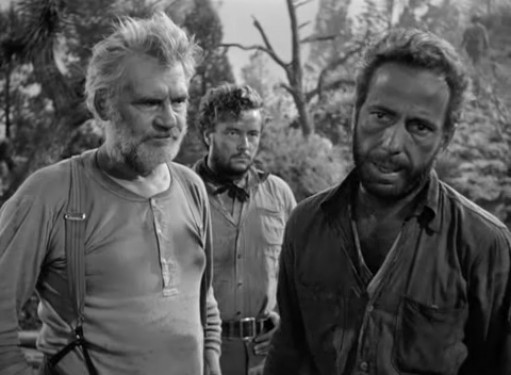
My two favorite John Huston films both get their adventures started with a handshake. In The Treasure of the Sierra Madre (1948) and The Man Who Would Be King (1975), determined men embark on dangerous quests to find fortune and glory. Summing up the relationship between the two films in his book John Huston's Filmmaking, Professor Lesley Brill writes that "the themes at the center of The Man Who Would Be King... remain closely related to those of Treasure: the power of human attachments and sustaining communities and the obstacles to both; conflicts between relatively innocent native peoples and intruders from technologically developed societies; interactions between humans and an animated natural world; ambiguities of destiny and choice; the equivocal possibilities of heroism." And the quests themselves are not officially kicked off until the men do what they must do in order to set their sights in stone: shake hands on it. The Treasure of the Sierra Madre is about a shake of hands to find gold. "Why not try gold digging for a change?" Fred C. Dobbs (Humphrey Bogart) asks his friend Curtin (Tim Holt). "It ain't any riskier than waiting around here for a break; and this is the country where the nuggets of gold are just crying for you to take them out of the ground--make them shine in coins on the fingers and necks of swell dames." Dobbs and Curtin have just been cheated out of their rightful pay by the corrupt Pat McCormick (Barton MacLane), and they are ready to try something new. They team up with Howard (Walter Huston), the grizzled old prospector who has experience in the gold-digging field, and then the deal is set. "Put her there, part!" says Dobbs, holding his hand out to Curtin. They shake on it, and then Huston's camera closes up on Howard as he looks upon their pact with a strange sense of uncertainty--almost as if he foresees the perils that are going to be awaiting them. Danny Dravot (Sean Connery) and Peachy Carnehan (Michael Caine) in The Man Who Would Be King shake hands over a pact to become kings of an ancient empire, win the support of its people and then "loot the country four ways from Sunday." Their old plan to con the Raj of Degumber was foiled by a fellow Freemason, novelist Rudyard Kipling (Christopher Plummer), who listens skeptically as Danny explains the new plan he and Peachy have layered out: "The less said about our professions, the better, for we have been most things in our time. We've been all over India--we know her cities, her jungles, her jails and her passes--and we have decided that she isn't big enough for such as we." "Therefore," continues Peachy, "we are going away to another place, where a man isn't crowded and can come into his own. We're not little men... so we're going away to be kings. Kings of Karifstan." Kipling thinks the whole idea is absurd, though he happily signs his signature on Danny and Peachy's "contract" to serve as witness to their agreement. Yet on the day of their departure, Kipling has second thoughts. "Man," he cries to Danny, "don't do it. The odds are too great." But Danny and Peachy remain fatefully committed to their cause. With regret and anxiety, Kipling shakes their hands goodbye. Huston first opens these two films with scenes that tour the marketplaces where the heroes began and shook hands before embarking on their adventures. The first shot of The Treasure of the Sierra Madre is of a Spanish lottery bulletin, and Dobbs, looking upon it, crumbles up his own lottery ticket in disappointment. He didn't win. "Hey, mister," he asks random men on the street, "could you stake a fellow American to a meal?" A white-suited man, played by Huston himself, is approached at least three times: "Such impudence never came my way!" he complains to Dobbs, and though he is willing to give him two more pesos, the man declares that "from now on, you have to make your way through life without my assistance." This could possibly have been Huston's sly way of telling Bogart that he needed to start making movies without his constant help (they had been working together ever since Raoul Walsh's High Sierra in 1941--the same year in which Huston then directed The Maltese Falcon and thus made Bogart a star), but what I also like about this scene is that Huston is not condemning the life of poor people like Dobbs; he is fine with helping out people on the street, while at the same time realizing that one can only give away so much. The fantastic, two-minute opening shots of The Man Who Would Be King display an Afghan marketplace that seems entirely composed of everyday Afghans working for a living. There are no rich, white-suited businessmen around these parts, and, except for a barber that may remind us of the barber whom Dobbs spends his second peso on in Treasure, there are no professions in this marketplace that we recognize from the earlier film; just blacksmiths, tambourine musicians, cobra charmers, men with scorpions crawling on their faces and children clutching snakes in their hands. Only in the evening does Huston take us behind closed doors and introduce us to at least one white man: Kipling, who is writing away in his studies until he is surprised by a maimed figure emerging from the shadows behind him. "I've come back," whispers the figure. It is Peachy, and the remainder of the movie will be narrated flashbacks of his and Danny's disastrous quest. These openings each lead to the inevitable unlucky handshake, which is so key to Huston's sensibilities as a "beautiful losers" filmmaker. Though not all of his films (certainly not all of his best films) end unhappily, one of his most recognizable themes as an auteur was his penchant for stories of protagonists and antagonists who sweat, bleed and die for causes that end in ruin. From the moment the heroes in Treasure and King shake hands, the obstacles start piling up. Dobbs, Curtin and Howard are threatened even before they get up to the mountains, during an assault on their train after which the conductor sighs a relief that "not many passengers get killed"; and once in the mountains, Dobbs and Curtin are almost immediately seduced by the allures of a misleading stone of pyrite (giving new meaning to the term "fool's gold"). Danny and Peachy, meanwhile, are forced to imitate British officers in order to get past imperial guards blocking their way to Karifstan; and once inside the hills they must abandon their camels in order to cross an enormous river that originally looked only like "a little wavy blue line on the map." Oh, and bandits. The Mexican thugs in Treasure are led by Gold Hat (Alfonso Bedoya), whose often-misquoted "I don't have to show you any stinking badges!" tirade inadvertently exposes him as a fraud when he and his pack attempt to introduce themselves to Dobbs' group as the local police. The Afghan bandits in King are in some respects even more menacing because they never speak, and when they intrude in on Danny and Peachy's campfire we are unsure in figuring out if they are friends, or enemies. They observe Danny and Peachy's clothes, touch them and then hold them at gunpoint; only after Peachy surprises them by spitting explosive ammo into the fire are they able to kill each of the bandits one by one. To be sure, the bandits in Treasure are not as easily disposed of; and, as we later find out to our horrors, Gold Hat will be back. The heroes in Treasure are lazy. "If I'd known what prospecting meant," croaks an exhausted Curtin, "I'd have stayed in Tampico and waited for another job to come up." Likewise, the heroes in King are ignorant of the basic facts of world history and how it contradicts the plans they've set for themselves. When Kipling informs Danny and Peachy that no white man has ever come out of the Afghan regions alive since Alexander, Peachy's response is terminally idiotic: "Alexander WHO?" And when we see each of the heroes in each of the films mistreating minorities, it's as if Huston is drawing out the crude Social Darwinism of B. Traven and Kipling's original characters (and at the very least out of Kipling himself, who was an acknowledged white supremist). Dobbs in Treasure, for example, is not above tossing a glass of water into the face of the innocent Mexican lottery boy (a young Robert Blake); and Peachy, in King, throws a fat Indian named "Mr. Clutterbury Das" out the window of a moving train for the sole purpose of taking advantage of an opportunity to acquaint himself with Kipling. They're all charismatic heroes in their own ways, but boy are they stupid white men. Laughter plays a special role in both films. Sometimes laughter in a Huston film is condescending, as during Howard's infamous dance scene in which he teases a hotheaded Dobbs and Curtin as "dumber than the dumbest jackass"; or when Peachy reacts to Danny's ridiculous notion that he was destined to be king of Karifstan: "Ha, ha! Pardon me while I fall down laughing!" Sometimes the laughter is scolded as inappropriate, as when native Mexican Indians in Treasure request that Howard, having healed one of their dying children, come to their camp to be blessed; Dobbs chuckles, but Howard reminds him that their request is serious, and not a laughing matter. Danny in King has a similar reaction when Peachy laughs during a Karifstan courtroom session in which a man is on trial for collecting dozens of goats from his wife's adulterers. Most prominently, however, laughter in the two films is portrayed by Huston as a cathartic release. "Oh, laugh, Curtin, old boy!" Howard reassures his disappointed friend. "It's a great joke played on us by the lord of fate or nature, whatever you prefer, but whoever or whatever played it on us certainly has a sense of humor! Ha--the gold has gone back to where we found it!" If laughter, in Treasure, allows Howard and Curtin to move on with their lives, it is even more helpful in King when it literally helps Danny and Peachy to proceed during a crossroads in their quest; stranded in the snowy mountain pass, their echoing laughter over a filthy memory helps bring down the peaks and fill in the crevices separating them from the path forward. I went into much detail over Huston's examination of capital punishment in his films in my piece on The Life and Times of Judge Roy Bean (1972), and I believe that in Treasure and King his views on the subject are most fully-realized. What makes Treasure such a scary experience is that we might initially sympathize with Dobbs, Howard and Curtin when they conspire to eliminate Cody (Bruce Bennet), a kind man who has happened on their site and asks if he would be allowed to join them. Dobbs is unfair to Cody, yells at him simply for making coffee, and then hits him. It is a very mean-spirited treatment of a man who means well--a man who sincerely thought he was "among friends". And, I confess that when I first saw Treasure as a junior in high school, I was in agreement with Dobbs' decision to have Cody killed. Perhaps it was due to Dobbs' convincing argument that the group cannot keep recruiting more and more men to help them dig for gold they would rather keep for themselves. I'm disgusted with my original response, though I think it is also a testament to the power of Huston's film: he brings out the animalistic feelings of us, only to bring us to a shocked realization of our mistake shortly after Cody's death. Huston's critique of capital punishment is continued during the execution of the villainous Gold Hat at the end; by throwing in that witty moment in which Gold Hat demands to be allowed to put on his sombrero before being executed by the firing squad, Huston humanizes the film's villain. In a brief fleeting moment, Gold Hat is a person just like you and me. Unlike Dobbs, Howard and Curtin, however, Danny and Peachy are morally opposed to capital punishment from the very beginning. Under the guidance of their chipper translator Billy Fish (Saeed Jaffrey), Danny and Peachy are able to train the inexperienced army of the vile Ootah (Doghmi Larbi) into good soldiers, and they are so successful in the battles they wage against Ootah's enemies that, pretty soon, they have secured peace in Karifstan. But when Ootah tries to decapitate his prisoners of war, the Englishmen draw the line between themselves and their dubious commander-in-chief. "There'll be no execution of prisoners in this army," Danny declares. Still, when Ootah himself is slain by his own people and his head is turned into a soccer ball, that should have been the first signal to Danny and Peachy that they've taken control of a race of people with a different code of honor. The same goes for when they are forced by the holy men of Sikandergul (as Howard was by the Mexican Indians) to journey with them to the holy city so that the wise-man Kafu Selim (Karroom Ben Bouih) can determine whether or not Danny is really a god. These holy men are nothing short of hypocrites: they wish not to "see any badness" in the battles that Danny and Peachy have fought, and yet within the confines of their city they quickly attempt to kill Danny by stabbing, shooting and, finally, making him walk across a bridge while the ropes are cut. They claim to be pacifists even though they are just another city of executioners. And what of women in the two films? Howard warns Dobbs and Curtin that "if I were you boys, I wouldn't talk or even think about women. It ain't good for your health." Still, Howard is not with sexual longings of his own. Listen to how he describes the panning of gold in the riverbed: "You got to know how to tickle her, so she'll come out laughing." And how he insists that once the gold mining is finished, they should restructure the mountain and patch up "her" wounds; as Curtin notes, Howard talks of the mountain as if she's a real woman. Danny and Peachy, meanwhile, abide strictly by a principle in their contract stating that they must ignore the temptations of the flesh while pursuing their goals of royalty, as to prevent needless distraction; and yet Danny is ultimately brought down by his love for a quiet woman, Roxanne (Shakira Caine, Michael's wife) who fears him. She, like everybody in the Afghan regions, believes that union between a god and mortal can only result in the mortal bursting into flames, and her arranged wedding to Danny in front of the priests of the holy city of Sikandergul is one of the film's most uncanny scenes. A suffocating bridesmaid is the first indication that something is wrong (it seems the holy god Imbra is angry not because Danny is marrying a mortal, but because Danny has lied to the priests about being a god), and then the kiss between Danny and Roxanne tears the entire thing apart. "The slut bit me!" he sputters, unaware that his bleeding cheek has given him away as the emperor with no clothes. The fact is, both Fred C. Dobbs and Danny Dravot meet their ends because their imaginations run away with them. Throughout Treasure, we can sense that Dobbs is giving way to greed, particularly during one of the film's most brilliant sequences in which he rashly disbelieves Curtin's warning that the hiding spot for his bag of gold has been invaded by a stealthy gila monster. Even after Curtin rescues him from a collapsed mine, Dobbs is still untrustworthy of his partner; finally, in a later scene, he shoots Curtin, leaves him for dead in the woods, steals his gold and then allows his own mind to play tricks on him. "Conscience!" he hisses to himself. "What a thing. If you believe you've got a conscience, it'll pester you to death. But if you don't believe you've got one, what can it do to you? Makes me sick, all this talking and fussing about nonsense!" Danny in King becomes just as full of himself when he demands that Peachy worship him as a god like everyone else: "Whatever you may think, and however you may feel, I'm a king, and you're a subject!" It is disheartening to see Dobbs and Danny take these spellbinding paths down the road to self-destruction, but it is necessary in order to achieve Huston's unique drama. Their tragic demises are in some ways called for by the genres themselves; they're "done as if by order", to quote Dobbs' irrational suspicions that an absent tiger has taken care of his dirty work for him. Both films have sad endings, but the heroes, in pure Hustonian fashion, do not regret a thing. They are happy with their memories, good and bad. Laughing still about the irony of all of their gold being whisked away by the winds back to the mountains, Howard adds, "This is worth ten months of suffering and labor, this joke is!" And soon Curtin gets it, too; he joins in the laughter. He and Howard may not be rich men, but the joke has allowed them to recover their strength: Howard will be fixed as the Mexican Indians' medicine man, and Curtin will go visit Cody's wife--possibly to participate in one of those fruit harvests he has always dreamed about. Danny and Peachy reach such climatic moments at least twice: first, when they are stranded in the mountains and they feel that hope is lost. "Peachy," Danny asks, "in your opinion, have our lives been misspent?" Peachy laughs off that notion with optimism: "I wouldn't change places with the viceroy himself if it meant giving up my memories!" And secondly, at the end, when Danny is about to be executed, he again asks Peachy for consolation: "Peachy, I'm heartedly ashamed for getting you killed instead of going home rich like you deserved to... on account of me being so bleedin' high and mighty. Can you ever forgive me?" "That I can, and that I do, Danny," Peachy nods, again with optimism. "Free and full without let or hindrance." I love both of these films with all my heart. They changed my life. They helped me look at troubling themes like greed, prejudice, religion and morality, and they allowed me to be at peace with all of those themes. Whenever I'm asked if John Huston was an auteur, I turn them to The Treasure of the Sierra Madre and The Man Who Would Be King. Here are two films about adventures that each begin with a handshake, and end in bittersweet victory. And what's left is a collection of unforgettable moments in classic American cinema that have granted me with memories I would not have given up for the world.

Thursday, August 26, 2010

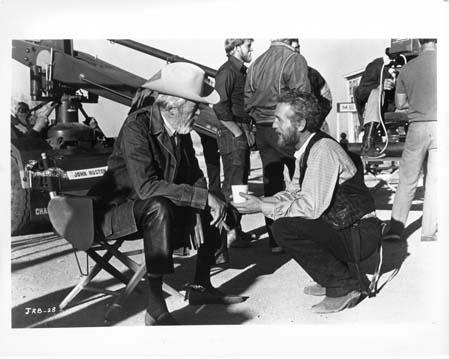
The Life and Times of Judge Roy Bean (1972)


It wasn't easy for me to enjoy The Life and Times of Judge Roy Bean. I wasn't prepared for a Western in which the hero is a strict enforcer of capital punishment who executes criminal after criminal and is glorified--indeed, almost idolized--by the filmmakers, as if we're expected to root for Judge Roy Bean and believe that everything he does is morally and justifiably right. That John Huston was one of the most progressive of American directors and that John Milius is still one of the most conservative of American screenwriters is a given, so it was odd for me watch this film, which often plays as an uncomfortable hybrid of the two filmmakers' differing political opinions. Looking at it from a Hustonian fan's point of view, I can certainly recommend The Life and Times of Judge Roy Bean, but I'm not sure I could say that it was one of his best films. In fact, I had to force myself to sit through a second viewing--because the movie made me angry when I first saw it, and it took all of my strength to keep from turning it off and giving my frustrations a rest. I've seen maybe a handful of Huston films that were simply mediocre, but I don't think a Huston film has ever made me angry before.

Let's examine the facts of case: if we were to ask Huston and Milius what the message of the film is (specifically where it stands on capital punishment as a form of justice), I think their answers would have contradicted one another. Though I don't want to speak permanently for him, I have a good feeling that Huston was opposed to the death penalty throughout his career, particularly in his films. Take for example how Sam Spade hopes that Brigid "doesn't get hanged by that sweet neck" in The Maltese Falcon. Or how Charlie and Rose are very nearly executed in The African Queen. How Danny in The Man Who Would Be King courageously refuses to allow his prisoners of war to be executed and then later, as if by cruel cosmic joke, is executed himself. How drunken Geoffrey in Under the Volcano is crudely executed by Mexican fascists. All of these examples suggest the work of a filmmaker who is skeptical about the death penalty and possibly believes that it does more harm that good. Even in The Treasure of the Sierra Madre, where a wretched villain like Gold Hat gets his just desserts in the line of a firing squad, Huston lightens the scene somewhat with that funny moment in which Gold Hat demands to be allowed to put on his sombrero first.

Now look at how this divisive issue is examined in The Life and Times of Judge Roy Bean, in which the protagonist is a man who literally makes a living off of the death penalty. The movie's treatment of the subject matter is maddeningly unclear: are we supposed to be applauding for him? I was pleased that Huston gets immediately to the heart of the problem I had with the film in his autobiography An Open Book. He describes the sequence in which Bean (Paul Newman) is confronted by his marshals, who have been egged on by their activist wives to request that Bean stop hanging his criminals in public for everyone in town to see. They're afraid it will make a bad impression on businessmen visiting from the northeast, and they want the hangings to start being conducted privately, in a barn. Bean is disgusted with their request: "In a barn? Like they was ashamed of it? Why, I'd rather give up hanging!" Huston writes in his book that he believes scenes like this in the film "said something important about frontier life and the loss of America's innocence". He then adds, "I'm sorry to say that one famous critic took all this to be an argument in favor of capital punishment."

That "famous critic" was none other than Pauline Kael, but it's fair to conclude that Huston saw the film as a dissection of Bean's justice system, not as an endorsement of it.

But there is no doubt that John Milius probably has another opinion. Milius, who received notoriety after telling Joseph McBride, in a 1975 Daily Variety interview, that "I just absolutely hate liberals and people who are civilized", is Hollywood's baddest right-winger; and from Dirty Harry to Red Dawn he has been echoing his gung-ho beliefs loud and clear to inspire standing ovations out of America's red-state audiences. Was his screenplay for The Life and Times of Judge Roy Bean another such work? Milius' evident endorsement of Bean's actions can be felt even before the first lines of dialogue are spoken in the film. After the opening image of a map of nineteenth century Texas, and after Huston cleverly turns his camera sideways and plunges us downwards into the Pecos River, we are brought into the film's first scene, in which a shadowy figure rides across the river and then the screen is filled with a prologue that is totally awash in Milius' anti-liberal, anti-civilized sentiment: "Near the turn of the last century the Pecos River marked the boundaries of civilization in Western Texas. West of the Pecos there was no law, no order, and only bad men and rattlesnakes lived there." Then, Milius writes: "...Maybe this isn't the way it was... it's the way it should have been."

So, you see, we have two differing political perspectives from the two filmmakers.

I do love the sequence that follows. The shadowy Bean rides into a quiet little town near the river and arrives at the doorstep of a tavern where the "bad men" Milius writes of in his prologue are drinking inside. On the bulletin board is a reward poster for Bean's own gang of bank robbers, the Baldy Mitchell gang. He crosses out the picture of one of the gang members who is now dead, and colors a beard into the face of his own picture. He enters the tavern, and the outlaws (one of whom is played by a young Richard Farnsworth) greet him with unkind words. "Door," an outlaw growls at him. "Shut the door, squirrel." Bean asks for whiskey. They don't serve him. Everything is quiet.

He politely introduces himself. He says that that's his picture out there on the wall and tells of his gang's ill-fated attempt to rob the Granger's Trust in Magdalena. The outlaws don't care, and Bean, like Cody in Sierra Madre, is upset that he isn't among friends: "I always heard that a man on the dodge is welcome west of the Pecos... maybe I heard wrong." They tell him he heard right. But that the outlaws possess a book of the Revised Statutes of the State of Texas for no other reason than for "the whores to piss on" is a quick indication that something is wrong, and before Bean can react, the whores beat him up and loot his pockets, and the men tie his neck up to a runaway horse that carries him out into the desert. He wakes up to see a young Mexican girl regarding him sadly, like a small child. This is Maria Elena (Victoria Principal), and from here on out she will be Bean's angel. She fetches his gun for him, helps him to get back up on his feet, and pretty soon Bean is taking back the tavern by surprise, blasting everybody in his path. "RAAAAAAA!!!!!!!" he roars. "COME ON BACK HERE, I AIN'T THROUGH KILLING YOU! YOU HEAR ME? ALL OF YOUR KIND, I'LL BE WAITING!"

This is one of the best sequences in the film because we can actually empathize with Bean's fury. He is exploding, and so are we. In the moments when he has been hung by a horse and dragged off, we feel as if we have been left for dead out there in the desert with him, and we are just as eager as he is to waste that tavern and claim it as our own. It's no surprise that The Life and Times of Judge Roy Bean is Quentin Tarantino's favorite Huston movie, considering Bean's own telling line of how "God must have directed my bullets". There is a kingliness to the image of him sitting peacefully on a rocking chair in front of the tavern while the bodies of his enemies lie scattered around. This is his land now.

The underlining problem with this film, however, is that this sense of justified empathy with Bean's killing is felt only in this sequence, and then it is never felt again. For the rest of the movie Bean comes across as a totalitarian ruler--a reactionary whose tactics clean up the crime of the town, but in a way that is simply wrong. I intensely dislike, for example, the scene in which Bean and his new marshalls (Jim Burk, Matt Clark, Bill McKinney, Steve Kanaly, Ned Beatty) murder the disoriented Snake River Rufus Krile (Neil Summers) just for shooting at a wall poster of the famous Lily Langtry, whom Bean has a fetish for. Are we supposed to cheer at this scene, or laugh at it, or cringe at it, or what? And Bean's obsession with the absent Lily Langtry gets obnoxious fast; even though it is apparently true to the story of the real Judge Roy Bean (William Wyler used the Lily Langtry device for his own Bean flick, 1940's The Westerner), it doesn't exactly help us gain any more respect for him as a character. Bean gives one annoying lecture after another about how Langtry is a supposedly ageless woman, and how men who do her wrong deserve to hang and die. After some time of this, we're ready for him to shut up.

Now, it wouldn't be honest to say that Huston and Milius don't look at Bean's justice system objectively whenever they can. They do. The morning after Bean's slaughter at the tavern, Reverend Mr. Lasalle (Anthony Perkins) rides into town, and looks with shame on what Bean has done. Bean wants the bodies of the outlaws to be left for the buzzards, but the Reverend is a good man, and buries them. He does so because of an honorable principle that a fraudulent Christian like Bean so clearly does not understand: "I buried them because Christ had died for all of them." Perkins, though a fine actor in several other films, might have been miscast here as the Reverend, but his character makes a lasting effect; and in a witty voiceover from the grave, the Reverend pointedly observes of the fascistic Bean, "I haven't seem him since then, so he probably went to hell." Another scene of this strong caliber is the one that comes afterward, in which Bean and his marshals lynch the stuttering Sam Dodd (Tab Hunter). Though Dodd is a racist and a murderer, and deserves punishment, the way that Bean and his marshalls punish him is disputable; and it is hard not to agree with Dodd's own last words: "I am no worse and probably no better than the men who are about to end my days."

A few of the other scenes that look at Bean's justice system objectively are more humorous. Such as when old Grizzly Adams (played by none less than Huston himself) sneaks into town at night with a truck full of big furry mammals ("I cohabited with the b'ars!") and is forbidden by Bean to commit suicide, inadvertently exposing Bean's right-wing belief that suicide should be illegal but that lynching is okay. Adams gets the last laugh, however, by leaving Bean with a baby grizzly bear named Zachary Taylor, who spends a picnic with Bean and Maria Elena in the silly but amusing "Marmalade, Molasses and Honey" sequence, featuring all three characters riding a see-saw log to the music of Andy Williams. There's more humor in the intrusion of the evil albino Bad Bob (a hilarious Stacy Keach), who wants his horse cooked blue and screeches, "Hey, Bean! I'm here to rip your eyes out! And then... I'm going to take my ivory-handled knife and cut your head off and sell it to a friend of mine in a carnival!" The funniest moment is when he really pisses Bean off by talking trash about the town's most popular martyr: "Lily Langtry is a WHORE, BITCH, DOG! And I wouldn't waste my bullet on her... let alone my seed!" Admittedly, Bad Bob is the only other villain in the film that Bean is probably justified in killing, although--ironically enough--the townspeople are quick to point out, even before we do, that by shooting Bad Bob in the back, Bean never gives him a chance.

When the lawyer Frank Gass (Roddy McDowell) comes into town, however, the tables are turned. He comes to Bean with a federal government contract that designates the Jersey Lily tavern as his property--and what's more, he even proves that this is protected under the Texas lawbook that Bean carries around as if he knows it by heart. Bean, being the undemocratic leader that he is, tears this page out of the book and illegally overturns the law; then, when Gass complains, Bean throws him into the cage with Zachary Taylor and threatens to have him eaten alive. Even though Bean then proceeds to make a deal with Gass and promote him as the town attorney, it is only because of an obligation that Gass will otherwise be executed. Although Gass is not an entirely sympathetic character (he is suspected of hiring an assassin to try to whack Bean, and privately refers to Bean and Maria Elena's unborn child as a "bastard"), he comes off as a far more democratic leader; and sure enough, when Bean returns home from an unsuccessful trip to meet Lily Langtry, he finds that the women of the town have had Gass elected as mayor. The moment when Gass stops him from wrongfully executing a doctor (David Sharpe) who failed to save Maria Elena during her fatal childbirth confirms that he is a better leader than Bean.

I'm going to go out on a limb now and suggest that the film should have ended here. At ninety minutes, it would have been content to have Bean riding out of town and never looking back. But the last half hour of The Life and Times of Judge Roy Bean is a superfluous anticlimax; it's little more than a needless catharsis for Bean to return and strike back. By this time, Gass has become an oil entrepreneur who has helped the town prosper in economy and civil rights; and despite his hiring of shady figures in his law enforcement, the town is certainly no worser off than it was under Bean's watch. Though I can sympathize for Bean's marshalls, who have been reduced to drunks with low-paying jobs ever since Bean's departure, I can't sympathize with Bean's decision to rally them together again and engage in a pointless gang war with Gass' law forces that ends with everything in town except for the Jersey Lily burned to the ground. Whether Bean and Gass die in the firefight is never explained. Another disappointment is the character of Bean's tomboyish, grown-up daughter Rose (Jacqueline Bisset), and although Bisset tries her hardest, she doesn't make much of an impression. One also needs to really listen to Gass' confrontational words that are supported by the townspeople: "We've stood for this long enough! Raze that place! We must be done with Beanism!" Well... he's right, isn't he?

And I don't really know what to make of the final scene in the film, either. At last, Lily Langtry (played by Ava Gardner) has decided to come and visit the town--but by this time, the Judge and most of his companions are now deceased. Rose has gone off and married an aviator. The Jersey Lily has been turned into a museum. Miss Langtry inquires about some of the things Bean did in her honor during his lifetime--and we discover that she has just as sick of an idea of justice as Bean did we she deems Bean's barbaric murder of Snake River Rufus Kile as "most appropriate". Again, these scenes strike me as flat and unnecessary. However, Professor Lesley Brill makes a case in defense of these scenes in his 1997 book John Huston's Filmmaking: "Miss Langtry's immortality is directly connected to the Judge's worship, his faith has divined the goddess within her and brought it to full realization. Bean's own immortality thus resides not only in the perpetuation of his memory but in Lily Langtry's deification." Brill's eloquent reading into the film's ending scenes does make me want to reconsider this rather dubious cinematic conclusion.


Paul Newman believed that The Life and Times of Judge Roy Bean was the best movie he ever made. "I was really surprised that it didn't get the kind of following it deserved," he later said. "I thought that was a wonderful piece of Americana. I think that's probably my best work--if not my best work, certainly close to it... I look back on that experience as the most rewarding experience that I've had as an actor because he [Huston] really let me crawl out of my skin and do the work that surprised me." I can see definitely where Newman was coming from--even when taking into account my own reservations towards the role. Milius reportedly had reservations of the opposite complaint; he wasn't pleased with Huston's decision to cast a Hollywood liberal (#19 on Nixon's public enemies list, to be exact) in a right-wing lead character role. Ultimately, Newman's work here, like his work on Altman's Quintet (1979), is proof that his 1970's performances were riskier, and far more experimental than his previous work. Drawing from those observations, I agree: Newman's performance in this film was one of his finest.

So, it's a troubling movie. It doesn't always work. Its hero is despicable, its message is uncertain, and it's too long. Nevertheless, it is an important film in Huston's career. I don't know if it's a great film, but I think it deserves more contemporary discussion. The cinematography by Richard Moore and the catchy music by Maurice Jarre are impossible to dismiss, and so is the film itself. That it is an antiheroic Western in the spirit of Peckinpah is another strong factor, which makes it important as a staple in cinematic American Westerns. Hot off Peckinpah's romanticism of honorable bad guys in The Wild Bunch, here were Huston and Milius--a progressive director and a conservative screenwriter--collaborating together, echoing the old days and the despair of a twentieth century in which the West was a thing of the past. In Milius' screenplay, "the desert reclaims it own" when Bean's marshalls burn down the town at the end, but surely the desert won't hold it forever.

"It's all changing," Bean sighs. "The country's changing. The railroad's coming. People will pass by and look out the window and never know what it took to make all this. They won't know about the bear... they won't know about me. I guess it doesn't matter." It's a brief monologue that illuminates the differing worldviews of the two filmmakers: Milius fantasizes about the order of a judge who hates liberals and hates people who are civilized, and wipes his feet on the basic human rights of the criminals who stalk his land. But in Huston's world, crime is only a left-handed form of human endeavor--and when Judge Roy Bean's ruthless system of order was finally changed, the country changed, too.

Friday, August 13, 2010

Heaven Knows, Mr. Allison (1957)


John Huston begins Heaven Knows, Mr. Allison (1957) with an ocean, an island, a raft, a man, and no dialogue. For seven and a half brilliant minutes, not a single word is spoken as the camera approaches the same drifting raft at least five times before finally getting a glimpse of what is inside: an unconscious marine. This is Corporal Allison (Robert Mitchum), and he has not seen land for days. When he wakes up, he walks on shore and drags the raft behind him--as the camera takes the point of view not of Allison, but of the raft. Then we follow Allison as he plunges into the forest and crawls agonizingly on piles of sharp, unseen debris scattered around on the sand. He reaches a lagoon, drinks from it, then swims across it to a small cottage on the other side. Out of the doorway sweeps Sister Angela (Deborah Kerr), startled by his presence. Allison has the first line of the picture: "Let's keep it quiet, ma'am." He asks her if she speaks English. She does. She asks him if the Americans have landed. No, it's just him. He asks her if she's alone. "God has been with me," she replies.

They walk into the cottage for some shade, talk some more, and then Allison, exhausted, slides down the wall. "Excuse me, ma'am, I'm real beat," he explains. He entered the picture exhausted, and now he's exhausted again. For Allison is a marine, and as we will learn throughout the course of the picture, he can only do so much--for his country, for a woman--before tiring. "Now, you look at me, ma'am," he tells her in a scene later on, "what do you see besides a big, dumb guy? I'll tell you: a marine, that's what I am. All through me, a marine--just like you're a nun. You got your cross, I got my globe and anchor." Yes, but he's not a marine incapable of losing his strength.

They both came to the island, called Tuasiva, under horrible circumstances that Huston wisely decides not to dramatize for the picture. Allison was the survivor of an attack launched on his submarine by the Japanese and, we figure, the only survivor of his crew. Sister Angela landed on the island four days ago with one "Father Phillips", a very old man who was in his 70's. They were supposed to rendezvous with another colleague from their church and set off for Fiji, but then the Japanese scared their colleague off--and then Father Phillips died. Of exhaustion, perhaps.

The narrative of a man and a woman banding together in the middle of wartime is a concept that Huston had, of course, already used in The African Queen (1951), and the similarities between the two pictures are impossible not to notice--from Allison's drunken tirade inquiring why Sister Angela ever became a nun (recalling Charlie Allnut's "skinny old maid" speech), to the heroes being saved from destruction by another form of destruction, as when a bomb dropped by the U.S. Navy intervenes just before the Japanese can threaten Allison and Sister Angela with a grenade (recalling the African Queen torpedoing the Louisa before Charlie and Rose can be executed). Or the symbolism of fire and water in the two films: fire eliminates Rose's village and Sister Angela's cottage (and the getaway raft to Fiji), while water transports Charlie and Rose to their destination in one piece and safely washes Allison onto the shores of Tuasiva.

These similarities and more are all covered in Professor Lesley Brill's John Huston's Filmmaking (1997), an invaluable piece of literature for those seeking out auterism in Huston's work. Brill writes that Heaven Knows, Mr. Allison "brings to the dramatic situation of two people isolated in a world at war slightly less fantastic assumptions and more realism... generically, Allison has less of romance and more of irony than The African Queen. Mythologically, the consequences of the Fall are more present in Allison than they are in the earlier film. The civilizations that exist elsewhere and that periodically impinge upon the protagonists' solitude in both films have more power to affect the lives of the central figure in the later one. Sister Angela and Mr. Allison are less able than Rose and Charlie to recreate themselves in a latter-day Garden of Eden, to escape the effects of history and of the world beyond the jungle, or to achieve a personal, private salvation."

Less than a decade later, Huston would literally dramatize the Garden of Eden in his The Bible... In the Beginning (1966); but Heaven Knows, Mr. Allison is decidedly a much more clearly defined Hustonian version of the Adam and Eve story: Huston doesn't look at it from an exaggerated perspective, as he did with The Bible, or as he did with the more damning, atheistic perspectives on display in later works like Wise Blood and The Dead. Consequently, Brill argues in his book that Heaven Knows, Mr. Allison is the most sympathetic of Huston's films to regard Christianity--not just in how it respects Sister Angela's beliefs more than it does champion Allison's nonchalant attitude towards religion (despite his claim that "anyone with any sense believes in God"), but in the ways Huston looks upon the complicated romance between Allison and Sister Angela. It's a matured perspective of the ways the real Allison and Sister Angela might have behaved. There is no sex, no amorous signs of affection--not even a kiss between them. This is Huston's idea of what Adam and Eve could have done right.

Allison and Sister Angela are two different people, and they have wildly different perceptions of things like nature and war. Looking around for food on the island, Sister Angela spots an enormous shell relaxed on the ocean's waves, and happily beams, "Look at the turtle, Mr. Allison! Sunning himself!" Allison sees not a creature of God but a bare necessity: "We're gonna catch that turtle, ma'am!" A Japanese spy plane (a "meatball") soars over the island and Sister Angela's first intuition is to run, while Allison immediately pulls her down to the ground and covers her from sight with palm fronds; her white dress is so attractive to enemy eyes that Allison will have to keep her out of plain sight, "even at night--if there's a moon." And when Japanese troops invade the island, forcing them to retreat to a hidden cave, Sister Angela decides that the most peaceful option would be for her to turn herself over; Allison begs her to reconsider "for the sake of my morale."

Huston, cinema's greatest adapter of literature, wrote the screenplay with John Lee Mahin from the book by Charles Shaw (described by Huston as "a very bad novel which exploited all the obvious sexual implications of a marine and a nun cast together on a South Pacific island"), and covers the film's production in a mere four pages in his autobiography. He tells the familiar story about the dangerous stunt Robert Mitchum had to perform in crawling along the sharp debris along the island's sand--a stunt that left Mitchum bleeding from the neck down. He tells a lesser-known story about Deborah Kerr reportedly having nightmares for years and years over the sequence in which she had to lay down in the swamp at night, during the sequence in which she flees from Allison in the middle of his drunken tirade. Huston also writes in great detail about the film's difficult finale, in which Tuasiva is ravaged by explosive warfare delivered from both sides: one explosion was so hazardous that it came very close to harming him and his crew.

One of the most delightful aspects of Heaven Knows, Mr. Allison is how well it plays as a two-character drama. Even more so than The African Queen, this is a film where there are only two principal characters; indeed, with the exception of some occasional lines from the American navy soldiers who occupy the final scenes, Allison and Sister Angela have all of the (discernible) lines of dialogue in the screenplay. The Japanese soldiers do much of their own talking, but Huston avoids subtitles and keeps their dialogue in untranslated foreign language.

What's great about the portrayal of the Japanese in this film is that these are not the kind of stereotyped bad guys that, say, Bogie mows down with a machine-gun turret at the end of Huston's early studio picture, Across the Pacific (1942), but disciplined soldiers who are only playing their part in the war. Huston milks tremendous suspense out of a sequence in which Allison sneaks into the Japanese compound and has to hide in food shelves overnight when soldiers nearby begin playing a game of draughts; the soldiers themselves are human, enjoying their moment of free time while Allison waits for them to leave (a curious rodent almost spoils his hideout). And there is some tragedy to a scene in which Allison is forced to stab a Japanese soldier who spots him fleeing from a food tent, but, then again, they are trained soldiers with the objective of having to kill one other--and this is war. At the same time, there is some comedy to the fact that this enemy soldier is in Karate gear when he spots Allison and attempts to slice down his foe with his fighting tools (and in a sly Hustonian touch, Allison disposes of the body in the ocean, only for the waters to expose this secret to the enemy a short time later--a plot point recycled from Key Largo).

That water is both a benevolent and betraying force in Heaven Knows, Mr. Allison is a testament to Huston's complex study of this natural element as a plot device. Brill argues throughout his book that water is a principal element in Huston's filmography, and talks most in-depth about how it is employed around the scene in which Allison proposes marriage to Sister Angela. After this scene, Huston bookends each of the following scenes with images of waves crashing along the island's shores. Brill suspects that Huston got the inspiration for this imagery from the prose in Chandler's The Big Sleep describing how "the surf curled and creamed, almost without sound, like a thought trying to form itself on the edge of consciousness." In other words, the changing tides of the waters surrounding Tuasiva reflect how Allison and Sister Angela's emotions surrounding Allison's marriage proposal are constantly changing.

The marriage proposal scene itself is an interesting one. The Japanese have left the island--permanently, it seems--and Allison and Sister Angela are free to be alone again after an evening of witnessing a series of sky bombings equivalent to "a Joe Louis fight". Sitting together the next day, Allison celebrates by singing "Don't Sit Under the Apple Tree (With Anyone Else But Me)", and Sister Angela listens carefully to the song's lyrics. "Ah, this terrible war," she mutters, "taking young men away from their sweethearts." She tells him that he should have a wife and family. Then, after hesitating, Allison asks Sister Angela to be his wife. She tries, politely, to decline the offer, as she is technically already married to Christ. As of now she wears a silver ring, and once she has taken her final vows, she'll wear a gold one. Embarrassed, Allison tries to get her to forget he ever asked such a silly question... but the raging waters around the island suggest that his irritation with her refusal can only get worse, and that she can only get more uneasy over his concealed, but no less apparent, frustration.

Allison's impatience finally pops during the scene in which he gets drunk on a bottle of burning sake (which, as Brill cleverly notes in his book, lies uncertainly somewhere between Huston's contrasting symbolism of water and fire displayed throughout the film), and then complains to Sister Angela about her unnatural beauty. Why did she have to be a nun? Nuns shouldn't beautiful. He sings the apple tree song again, but this time out of drunken spite: he's angry at Christ for taking his sweetheart away from him. "We don't belong to nothing beyond this island!" he cries. "All we got is each other--like Adam and Eve. Like we was the first two people on Earth, and this is the Garden of Eden!" Sister Angela bursts into tears and flees out into the rainy wilderness, and Allison has to recover her quivering body the next morning when the Japanese return (Brill, himself a Hitchcock scholar, suggests that Allison's eloquent rescuing of Sister Angela may have inspired the sequence in Vertigo, released the next year, in which Stewart saves Novak from drowning in the San Francisco Bay). When she wakes up, Sister Angela, impressed with Allison's valiance, hints that "perhaps God doesn't intend me to take my final vows". Well, does he?

Huston believed that Heaven Knows, Mr. Allison was "one of the best things I ever made." He continued that "the picture-maker's life is subdivided into many lives. When one of those lives has been a joyous experience, as Mr. Allison was, I hate to see it end. Nor do I like to say goodbye... in the case of this picture, I lined up the last shot and left before the take." So, for that matter, do Corporal Allison and Sister Angela part company before reaching any sort of amorous climax. Unlike Huston, they wish each other goodbye--although the intrusion of the U.S. Navy will interfere with any romance they could have had together. But they will exit the picture together, and Sister Angela will follow closely behind the navy soldiers carrying Allison across the miniature bridge and off the island. She will not be his wife. But like a guardian angel, she will hold up her cross, and she will make sure that he is transported to sanctuary while he recovers from their past days of hard work, exhausted. Or, as Allison himself might put it, "beat."

Friday, August 6, 2010

Sinful Davey (1969)


"When fame comes to a man at so early an age," writes Davey Haggart, "it can only be deserved. As we will see later in these memoirs, I was much too enterprising a fellow to be wasted in the army. The trouble with the King's service... is the service you have to give him."

So begins Sinful Davey (1969), John Huston's 95-minute odyssey of a young rebel who deserts the British Army, is chased by the government, arouses the excitement of female fans near and far, and seeks to make a name for himself by becoming the first man ever to successfully con the Scottish nobility. But where he excels as a ladies' man he falters as a stuntman: he cannot steal a coach without falling off of it backwards, and although he is able to lead pursuing troops into the middle of a grassy bog of quicksand, he is finally caught when he fails to avoid getting hit in the head by an incoming golf ball. This is a relentless soul who will stop at nothing to be Scotland's most famed rebel--the kind of man who takes offense when only five guineas are placed on his head.

But time has not been kind to the film. It's hard to watch Sinful Davey today without immediately noticing that the production was a rather lame attempt to cash in on the success of Tom Jones (1963). Whether or not Huston himself ever borrowed anything from Tony Richardson's Academy Award-winning film is of course up for debate, but nevertheless the film--allegedly based on a true story--is practically the same movie all over again: 18th-century European has a series of misadventures; 18th-century European becomes a Casanova type; and 18th-century European is nearly hanged at the end of the film before somehow living happily ever after. Not to mention he gets the girl, too.

That isn't to say Sinful Davey isn't worth seeing; it most certainly is, just as every Huston film is worth seeing. John Hurt's performance in the title role is an absolute pleasure, and he captures every inch of that roguish charisma that Albert Finney had in the Richardson film. When Davey tells his new friend, the pickpocket MacNab (Ronald Fraser), about his plans for the future, we look forward to them with anticipation. Davey's father, we learn, was the infamous Willie Haggart, who tried and failed to pull a con on the Scottish nobility, and has now been all but forgotten; he is remembered only by envious criminals of the present day, and nobody even knows where he is buried. Davey hopes to correct his father's mistake and somewhat restore dignity to his family name. "My father, if you recall, had bad luck robbing the Duke," he reminds MacNab, "while I intend to finish off what he started."

No doubt this is "an amusing notion", as Huston himself agrees in his autobiography, and Huston even goes on to say that the finished product was "a light-hearted romp... an altogether delightful affair." But is Sinful Davey a successful film? I don't know. To begin with, let's talk about the problems with that beginning scene, in which Davey is writing his memoirs and Hurt's voiceover is heard over the soundtrack. It is followed then by a title song, sung over the opening credits by Esther Ofarim. It seems a jolly enough way to open the picture, even if it does reek of conventionalism. But as Huston later writes in his book, this is not how Sinful Davey was ever supposed to begin in the first place.

"Like The Barbarian and the Geisha," Huston writes, no doubt remembering the way that John Wayne had tampered with Huston's original vision on the aforementioned film, "it [Sinful Davey] was ruined after I delivered my final cut. I turned it in and then that was that until I next saw it upon release. I was aghast! Walter Mirisch, the producer, had given full sway to his creative impulses. He had taken a scene from the end and put it at the beginning, so that the whole story became a flashback. And he had added a dreadful narration! Under the circumstances, Otto Preminger [perhaps Huston's recollection of the way Preminger bullied Tom Tryon on the set of 1963's The Cardinal] would have brought suit. I sometimes wish I were Otto Preminger!"

Now, does that mean that we should look at the film differently simply because Huston's picture had been taken away from him? Again, I am at a loss to really say. All the same, I am not sure Sinful Davey would be any more or less of a better film than it already is, and I have a sneaky feeling it would still look like what I've accused it of being: a pale Tom Jones imitation. There is no question that Huston's intent with the film is supposed to be comical and tongue-in-cheek, but the screenplay by James R. Webb (adapted from the real David Haggart's book) has very little of that bizarre imagination that compelled, say, Truman Capote to write his own screenplay for one of Huston's most celebrated films, the infinitely superior Beat the Devil (1954). Students of cinema, of course, recognize Beat the Devil as the first great cult classic of American cinema, and rightfully so: that film offered an hour and a half of Bogart and Jennifer Jones in a race against a team of scheming, sniveling bad guys (including Peter Lorre!) that veered around Italy and across the seas to the Middle East. The plot concerned a quest to find a dangerous supply of uranium, but that was of second importance.

In fact, it was an incomprehensible movie without really any plot at all, and that was the point. Sinful Davey, to be sure, offers some funny gags here and there--as when Davey and MacNab try to burgle the coffin of the recently deceased "Tom Pepper", but are are foiled when night watchmen burst the coffin open and it releases cabbages that roll down the street. Or when a dwarf named Billy the Goat (Mickser Reid) beats the living Christ out of Davey in jail (shades of the Nazi Mexican dwarf that menaces Finney's Geoffrey Firmin in Under the Volcano), and, later, because of his small size, is risen up in the air to burst through the roof of the jail cell, allowing Davey and his fellow cellmates to join the sultry ladies upstairs. And, in the scene where Davey is hit by a golf ball and knocked unconscious, Huston plays a sort of Chuck Jones-inspired "birds chirping" queue on the soundtrack. All fine gags, but unfortunately none of them overcome the limits of the film's ordinary narrative.

One thing I like about the opening scenes of the film is Davey's escape from the British Army. Bored with having to beat an instrumental drum over and over again while marching in line, Davey, ignoring the commands of his peers, jumps off a bridge and, despite being unable to swim, survives the fall by using his drum as... a boat. This helps validate one of the theories that Huston's scholar, Professor Lesley Brill, uses in his 1997 book John Huston's Filmmaking: that water, in Huston's films, is a device that spares the characters of the story more than it does pose as a threat. Consider how Bogart and Hepburn always survive the death-defying rapids of The African Queen (1951), and are magically carried away by peaceful waters in the closing scene of that film; or how Heaven Knows, Mr. Allison (1957) begins with the ocean peacefully washing Robert Mitchum, lying unconscious in a raft, up onto the shores of the seemingly deserted island. Even in a perilously submerged film like Moby Dick (1956), the whale is far more menacing than the waters it swims in, and although Captain Ahab eventually dies by drowning, it is only after being tied to the side of the whale by ropes. In Sinful Davey, the river helps Davey escape from the British Army, and although it transports him to a rather disconcerting destination (a water wheel), Davey survives this obstacle as well.

Professor Brill goes to even greater pains looking for Hustonian elements in Sinful Davey by analyzing the end of the film, in which Davey is sentenced to death by hanging; Brill eloquently compares this scene to the ending of The African Queen. "Like Charlie, he [Davey] manages to be remarkably calm in the face of death, devoting his 'final words' to a plug for his memoirs, soon 'to be sold to the public at a most reasonable price'," Brill writes in his book. "Rescued just after what appears to be the nick of time, his story ends, like that of Charlie and Rose, with the prospect of life as a married, presumably reformed man, saved by the love of a good woman."

That "good woman" is Annie (Pamela Franklin), a quoter of the Good Book who is a childhood friend of Davey's, and who carefully follows his trail throughout the film to make sure that he doesn't get into trouble. Franklin's work here is one of the best female performances in Huston's films, right up there with Jennifer Jones in We Were Strangers (1949), Hepburn in The African Queen and Marilyn Monroe in The Misfits (1961). She obviously loves Davey more than he loves her, and at one point cannot hold back her jealousy. "Davey, you've kissed every female within reach," she complains, "but have you ever given a thought to kissing me?" She is a strong woman who seems to be out of Davey's league, and in some ways he doesn't deserve her--but it is finally because of her courageous efforts, and not the sympathies of the kind but powerless Duke (Huston regular Robert Morley), that Davey eludes his capital punishment. The film ends with Davey and Annie rejoicing in bed together, and Davey, still rather egotistical, keeps up with his roguish attempts to impress Annie (or keep her in a state of jealousy). "Have you no questions to ask at all?" he asks, dumbfounded. "Questions?" she responds. "No!" They kiss and make up. Davey may have gotten the girl in the end, but it is Annie who has the last laugh in the relationship.

The Internet Movie Database claims that a young Brenda Fricker makes an appearance in the film, as well as a young Angelica Huston, but I certainly don't remember seeing their faces. I would have to watch the film again and search for them, though I confess that I'm not in much of a hurry to do so. I wouldn't say Sinful Davey is one of the rotten apples at the bottom of the Huston barrel, exactly (I would try to make a case that The Unforgiven and Annie are even lesser works, for example), but I wouldn't say that the film leaves much of an impression on me, either. The purpose of a film like Sinful Davey is to entertain, and it does it well. But I keep thinking back to what Arthur Miller once said about Huston's work: that for every artistic triumph born out of quiet meditation and thought, there were films made for more banal, more commercial reasons--or maybe for the sheer fun of it.

Perhaps Huston made the film because, at the time, he was living at the enchanting estate of St. Clerans, and wanted to capture on film the green European countrysides that he had gazed upon so often during his legendary foxhunts. Aesthetically, what lingers about the picture, for me, is the cinematography by Edward Scaife and Freddie Young, which, although normal, captures the pure essence of the Scottish lands. In effect, Sinful Davey was perhaps the most successful film (until The Dead, at least) to fully illustrate Huston's embracement of Ireland, Scotland and everything in between--and then put it all on celluloid for audiences everywhere to see.

Saturday, May 29, 2010

Wise Blood (1979)


On the day he returns home from the war, Hazel Motes is so eager to shed the skins of his past that he throws away his Army uniform in a general store trash can. When he arrives at the doorstep of the homestead he once lived in, there are no friends or family members waiting for him--and the only thing inside that he thinks is still worth killing for is a creaky old chifferobe. Nobody lives out in the country anymore: everybody has long since taken the interstate out into the city. Nothing left out here, really, except failing Bible Belt institutions that have little more to offer townsfolk, other than to spread the Christian word. Each and every road sign and small business is still advertising for Christianity in one way or another--even the local Dairy Queen.

It is the America that Flannery O'Connor presented to us in her 1952 novel Wise Blood, and it burns devilishly (and comically) in John Huston's masterful 1979 film adaptation. Hazel Motes, as portrayed by Brad Dourif in one of the last great performances of the 1970's, has reached the sort of midlife crisis that all men who live in the Bible Belt must dread: he has lost his faith. In God, in Jesus, and especially in his fellow man--he talks again and again of starting up his own church, and yet he is the most resistant soul on the face of the Earth. He scares off a kid who offers him friendship, and viciously bites back when a fellow preacher offers him business partnership. We are not surprised, then, when his church never acquires a single follower, when his only two "relationships" with women are dismal failures, and when his utter contempt for people does nothing but rub onto others. When he is pulled over by a cop on the highway, it is not because of his driving or even because of the poor condition of his car but because, in the cop's own words, "I just don't like your face."

All of the people in this movie are losers. They are not people you would want to know in real life: they are fakes, racists, opportunists, eccentrics and blowhards. Some of them are lonely souls who sincerely don't want to be these kinds of people at all; it's just that by not having control over their environments, their environments have taken control over them. In his 1972 classic Fat City, Huston cast Stacey Keach and Jeff Bridges as small-town boxers with parallel stories: Keach was the aging boxer struggling for a big comeback, and Bridges was the teenage boxer who ultimately gave up his career to live life as a young family man. In Wise Blood, Huston again tells parallel stories, and contrasts Hazel Mote's story with the story of Enoch Emory (Dan Shor), an eighteen-year old who pretends to be an all-knowing holy prophet when, deep down, he is scared, lonely, and in terrible need of a friend. By the time the film is over, these two men will be so disillusioned with societal rejection that they will both try to transform themselves into unnatural creatures: one man will blind and maim himself in an attempt to achieve a martyr status, while the other man will flee from the world by retreating into the miserable confines of a gorilla costume.

Hazel does not start out in Wise Blood as an overzealous preacher; in fact, his transition to this role sort of happens by accident. When he boards a train and sets out for the city of Taulkinham, he is unsure of what he will find there, but he is hopeful for the chance to finally make something of his life--apparently the war did not do this for him. "I'm gonna do some things I ain't never done before!" he excitedly tells strangers. But even before he reaches the city Hazel has already committed his first big mistake: his new, black hat is the kind of hat that only a preacher would wear. He takes offense when a taxi driver asks him if he is a preacher, and he and the taxi driver get into one of those pointless religious arguments that leads to nowhere constructive. "There ain't but one thing for you to understand," Hazel barks, "and it's that I don't believe in anything."

Alas, Taulkinham is no different from any other city in the Bible Belt. The traffic cop gives pedestrians long, politically correct lectures about how they should obey red lights. The landlady (Mary Nell Santacroce) is prejudiced against Catholicism and other "foreign" religions, and only rents out a room for Hazel on the condition that he is a Protestant. The blind preacher Asa Hawks (Harry Dean Stanton, in the same year he appeared in Alien), who peddles the streets, is not even blind--that's just his way of getting attention. Hazel becomes a bit obsessed with Hawks and his oddball daughter Sabbath (Amy Wright), and intensely challenges their perspective of Christianity, to which Hawks reacts with hilarious disgust ("now, you listen to me, boy: Jesus is a FACT!"), and to which Sabbath reacts with swoon. She has never seen a younger man question her father like this before, and gets dreamy-eyed. "I'm just crazy about him!" she squeals in private. "I never seen a boy I liked the looks of any better!" While outside, Hazel is beginning a new church (free of charge) on the streets, right on top of the hood of his car. It will be called the Church of the Truth Without Jesus Christ Crucified.

And of course, there's Enoch Emory, who is thrilled to see somebody like Hazel rebelling against the religious norms of the city, only to discover just how aggressive of a man Hazel really is. Watch the scenes between Hazel and Enoch carefully--particularly their first scenes together. Huston speedily tracks his camera along the sidewalks, frantically making sure to keep up with the two characters as Enoch bores Hazel out of his mind with his life story: "My daddy made me come!" he whines. "I ain't but 18 years old, and he made me come here! And I don't know nobody, and nobody will have nothing to do with me! They ain't friendly!" Hazel tries to make Enoch go away, which only prompts Enoch to observe of Hazel that "you ain't from here, but you ain't friendly, either! And you don't know nobody, either!" It is also interesting that Enoch claims to work at the local zoo, and yet he behaves at the zoo like a true juvenile: he makes faces, insults the monkeys, and doesn't even wear a uniform. For all we know, Enoch doesn't work at the zoo at all.

Obviously these characters are not Hazel's idea of intelligent people--but that doesn't excuse his mean-spirited reactions towards them. There is a painful scene in which he explodes at Enoch for failing to know where Asa and Sabbath Hawks live: in a rage, he grabs Enoch by the coat, shakes him, screams at him, calls him a liar, and throws him on the ground. Does Hazel not even consider that Enoch is just trying to make a good impression? That all he wants to do is be his friend, and that he wants to help Hazel in any way he can? Hazel is equally unkind to Sabbath, who tries to make a pass at him during a walk in the woods--and Hazel responds by running off and driving away without her. And where Enoch and Sabbath both take extreme fascination in a doll-sized mummy from the museum, Hazel looks at it with indifference and, later, repulsion. After they give it to him as a possible "new Jesus" mascot for his church, not only does he refuse it, but he smashes it against the wall and tosses it out the window.

Much of these descriptions probably make Wise Blood sound like a depressingly angst independent film, but it is not. The film has several moments of comedy, not just to give the audience a break from some of the story's more angrier elements but also because--as Huston no doubt must have understood at some point--the humor helps make the portrayals of the Deep South civilians look a little less patronizing. Take, as an example, Enoch's theft of the doll-sized mummy from the museum, which is not treated like a suspenseful heist (like something out of, say, Huston's own The Asphalt Jungle), but is instead filmed with absolute wit and absurdity, like something out of the silent comedy era. Or when Sabbath attempts to seduce Hazel in a Mary Magdalene fashion by writhing around in leaves while telling of a supposedly cursed baby ("nobody cared if it lived or died") that drove its grandmother to suicide; Amy Wright is exceedingly funny in this scene and, what's more, sexy. Or the scene in which Enoch sneaks into a "Gonga" truck and Huston's camera cleverly follows the truck on the road in an unbroken, 30-second take--before Enoch emerges from the back of the truck in the Gonga costume.

Hazel may in fact be the only character in the film lacking a sense of humor. He's got a serious church to run, after all. In one of the film's most memorable bits of dialogue, he preaches to pedestrians: "Where you come from, is... gone. Where you thought you were going to... weren't never there. And where you are, ain't no good... unless you can get away from it." But this speech is interrupted by the nearby sermons of Hoover Shoates (Ned Beatty), a religion profiteer who is literally ripping off Hazel's church concepts for his own church; the only difference being that Hoover does not take these concepts seriously and is only in it for the money, which he gains by charging each of his followers a dollar. And as opposed to Hazel's church, Hoover's church is entertaining, complete with guitar music and a poor man (William Hickey) who is paid to stand on top of Hoover's car and recite raspy, lively sermons.

The poor man is only doing this because he has no other way to make a living, but Hazel is too bitter to understand this, and it results in the film's saddest sequence: in which Hazel tailgates the poor man at night, wrecks his car, forces the man to take off his preacher clothes, and then murders him. William Hickey, who would later play the mafia don in Huston's Prizzi's Honor (1985), has a truly harrowing death scene here in which, as he is dying on the road, all he can do is muster up regrets about the ways he treated his parents. He begs Hazel for help. But Hazel is too full of hate in his heart at this point, and he just leaves the man to die. There are a lot of scenes in Wise Blood that amaze me and make me laugh, but this is the only scene that makes me feel like crying. Hickey's performance here could very well be the single most unforgettable supporting performance in the film.

The score by Alex North is jovial and very much in tune with the song of the South. The screenplay by Benedict and Michael Fitzgerald is said to be very faithful to the original O'Connor novel (unread by me), perhaps because of the helpful input by the film's costume designer Sally Fitzgerald, who was more familiar with O'Connor's material than anyone else working on the production. Huston directed the film during a turning point in his life when he realized that old age was starting to catch up with him. He was forced to sell his Irish estate St. Clerens because of his inability to keep venturing on fox hunts, had moved to Mexico, and had been suffering multiple near-death experiences.

It's strange, then, to see how effortlessly creative a film like Wise Blood still is. Incorrect spelling is one of the film's common themes: Enoch thinks that "museum" is pronounced "muv-se-vum"; the gravestone of Hazel's deceased mother reads that she has gone to become an "angle"; and Huston''s first name is billed as "Jhon" in the beginning credits. And Huston cast real, unprofessional civilians in some of the key roles; hence, the prostitute really was a prostitute, the car dealer really was a car dealer, the highway cop really was a highway cop, and the homeless people really were homeless. As he did in most of his films, Huston also cast himself--he appears in flashbacks as Hazel's grandfather. In one of the flashbacks, a young Hazel witnesses the sight of "Miss Eve" and is so confused by feelings of arousal that he urinates in front of one of his grandfather's Jonathan Edwards-type sermons.

Like Humphrey Bogart's Frank McCloud in Key Largo (1948), Wise Blood is about a veteran who returns home from the war and has no family waiting for him. There is another Huston film, however, that Wise Blood acts as something of a variation on: his banned World War II documentary. The beginning and ending of Wise Blood, as suggested by Huston scholar Lesley Brill, is sort of a reversal of the bookending sequences of Let There Be Light (1946), which began with soldiers who were in traumatized shape, and ended with them making a healthy recovery. Wise Blood begins with Hazel as a healthy veteran, and ends with him in traumatized shape. Fed up with being dissatisfied with the reception received by his church (and other churches), he exhausts all other options and blinds himself with lime oil, wraps himself with chicken wire and punctures his feet with stones. It is during these ending scenes when we can sense that Hazel is starting to transcend, and is actually beginning to grasp the full meaning of his religious evolution.

There was a big disagreement between Huston and Brad Dourif over the ending. Huston wanted to write in an additional scene in which Hazel quarrels with his landlady over matters of rent payment--to which Dourif strongly objected. "No one will care about money at this point in the movie," Dourif remembers telling Huston, in an interview on the Criterion DVD. "The third act is all about Hazel Motes' turn, and his movement towards his commitment to be this saint--to really, absolutely devote himself to this idea of God." I think Dourif was correct, and I am personally glad that Huston cut the scene out. The ending of Wise Blood, as it stands, is one of the most powerful endings I can imagine in a film, precisely because Hazel is not the same man he was at the very beginning. For once he is going where none of his other religious counterparts have gone before.

And at the same time, there is the understanding that despite Hazel's transcending, he can't go on living life this way. Death seems to be the only thing that could bring him to peace. When trapped up in his bedroom with his landlady talking his ear off, he is essentially still being distracted by forces that would choose to compromise his religious transcending. It's no coincidence that there is no fire escape outside his window--there is no escape from the fires of hell. The landlady echoes Sabbath's earlier speech about the cursed baby by reminding Hazel that "nobody cares if you live or die but me!" She feels shut out by his solitary religious practices: "Unless you take what's offered to you, you'll find yourself out in the cold, pitch black! And just how far you think you'll get?" To me this line sounds an awful lot like a ghost of that famous line in Fat City, when Keach mutters to Bridges that "before you can get rolling, your life makes a beeline for the drain". For Hazel and the other characters in Wise Blood, religion offers one way out of the drain. But Hazel is the only one who takes the concept literally--everyone else looks at it in terms of money, and living the American Dream. All except for Enoch, who, last we see him, is running around in the stolen Gonga gorilla costume and reaps nothing from it except perpetual unhappiness. "I only wanted to shake hands," he says to himself in sadness, when people are frightened by his costume.

Howard Hawks once said that he was only interested in making movies about people who were good, and who were professional--he hated losers, and paid no attention to them. Huston, in effect, made films about losers. The Misfits was probably the first film in which he paid a close eye to such characters, and a decade later, Fat City revived this technique just as splendidly. But Huston was also an atheist, which made his choice of directing Wise Blood not entirely as natural as his decision to direct those first two films (though Benedict Fitzgerald's contributions to the screenplay are not so surprising, since Fitzgerald later went on to pen Gibson's The Passion of the Christ). And Wise Blood definitely is not the same sort of project as Huston's other great pictures (The Maltese Falcon, The Treasure of the Sierra Madre, The African Queen, Beat the Devil, The Man Who Would Be King), which are glorious entertainments.

No, I think Wise Blood, like The Misfits and Fat City, forays the harsher worldview that Huston would occasionally return to during his career. Even though he did not share the exact religious views of Hazel Motes, there is no question that he was in agreement with him that Christianity as a whole had regressed into a gross form of advertising. Even today, it is still represented by preachers who capitalize on Christ's words and blatantly disregard simple Christian teachings like caring for the sick and the poor. With that being said, Wise Blood is not asking us to like or sympathize with Hazel Motes: he is a bully, a narcissist, and a murderer. But the one thing he is not is a fraud. He knows that the only true way to find God is through one's own self. It doesn't involve charging people money to hear God's words. And although he pursues this goal in a manner that is extreme and could very well lead to nowhere in the end, Hazel at long last is courageous enough to give his whole life up for God--something that nobody else in Taulkinham is willing to do. Not bad for a man who didn't believe in anything.